Stingray City is two different places with one name
Which one you are buying
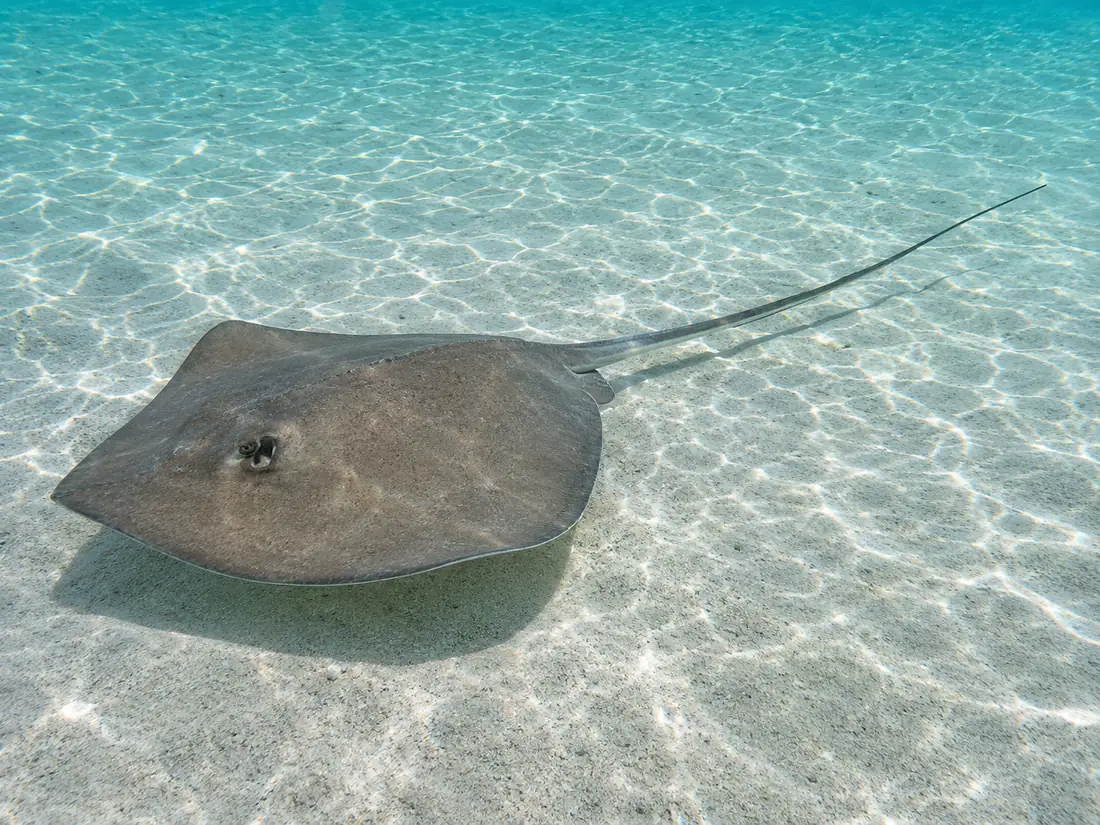
The name covers two locations and the difference is not decorative. The sandbar is a stand-up experience in about three feet of water inside a natural channel through the barrier reef. The dive site is deeper and is what a scuba operator means by the name. If you cannot swim, or you are bringing children, or you simply want to stand on sand with a ray going past your knees, the sandbar is the one you want, and the listing has to say so.
Every product on this site is a boat trip, not a dive. What each one includes is on the tours page, and what to have in the bag is on what to bring.
What happens when you get there
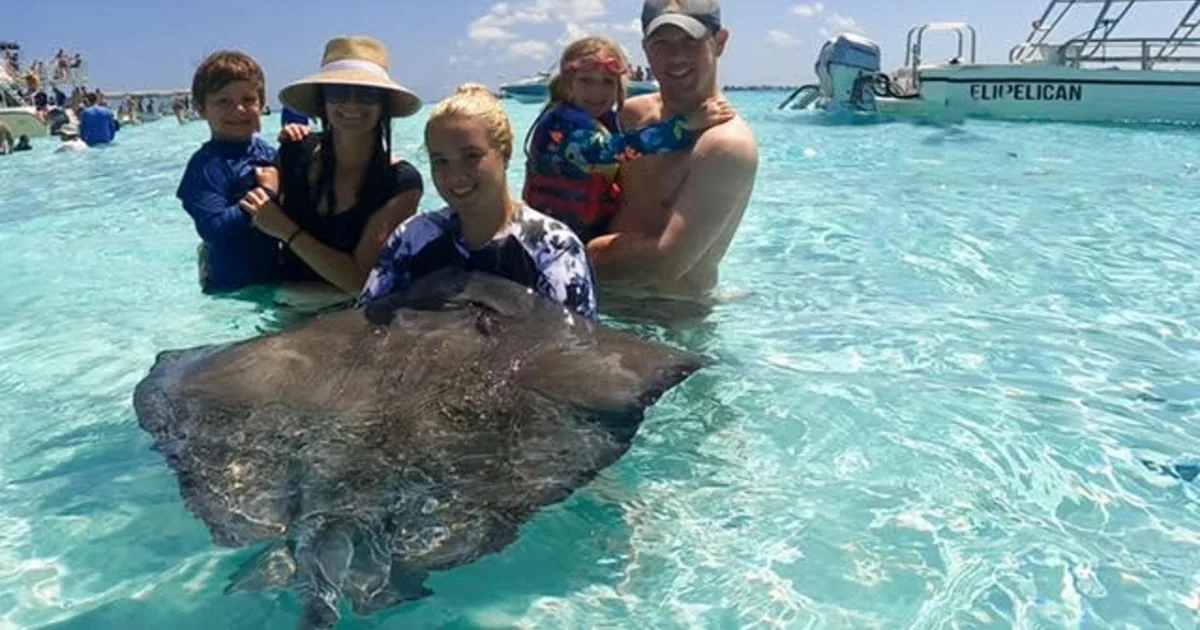
The boat anchors off the bar. You go over the side into water that comes up to about chest height on most adults. Staff hand out chunks of squid, and visitors feed, pet and interact with the rays. That is the whole experience, and it is over faster than people expect: Andrew, reviewing the shared catamaran, timed his stop at “35 mins at Stingray City”, with 25 minutes each at Coral Gardens and Starfish Point after it.
They are wild animals in open water and nobody is guaranteeing you anything. What the crew is doing is putting food where the rays already come.
Why the rays are there at all
This is not an aquarium and it was not designed. Fishermen used to stop in the shallows of the North Sound to clean their catch, and the discards drew southern stingrays in. Over decades the animals came to associate the sound of a boat engine with food, and they kept turning up after the fishermen had gone. Everything sold here today sits on top of that accident.
The sentence most pages leave out
Wikipedia’s article on Stingray City records “growing concerns about alterations in behaviour, feeding patterns and general ecology of these rays, when compared to rays not receiving supplemental nutrition”.
I earn a commission when you book one of these boats and I am printing that anyway, because you can read it in thirty seconds on the same source that gave me the depth of the sandbar and the name of the species, and a site that quotes one and hides the other is not worth reading.
I am also not going to stretch it. The source records a concern. It does not say feeding is harmful, and it does not say it is harmless, so this page says neither. It publishes no count of the rays and no trend in that count, so this page gives no number — and if another site tells you how many rays live on the bar, ask where the figure came from. No operator accreditation or certification is claimed here either, for the same reason: I found none I could name a source for.
What works
- The sandbar is shallow enough to stand in, at about three feet
- It is close: the boats work the North Sound rather than crossing open water
- Southern stingrays here are used to people, which is the entire point and also the entire caveat
Worth knowing
- Two different sites share the name, and a listing may mean the deeper one
- The published welfare concern is about behaviour, feeding patterns and ecology, and it is not resolved
- It is busiest when the ships are in, and a reviewer on the cheapest boat says so
The crowd, and the day you pick
Courtney, on the shared catamaran, wrote: “I would try to go on a day when cruise boats are not in port. Much more crowded but still good !” If you are a cruise passenger that advice is unusable, and it is still worth knowing why the bar is busy on your day. If you are staying on the island, it is the most actionable line in the whole review set. When the ships are in, and what a tender call does to your morning, is on the cruise port page.
The other way to buy quiet is the boat itself. A shared catamaran takes up to fifty; a private charter takes up to ten and costs less per head once there are nine of you. That sum is on shared or private, and the rest of the money is on what it costs.
 The only settled rating
Grand Cayman: Catamaran Cruise with Stingray City & Snorkel
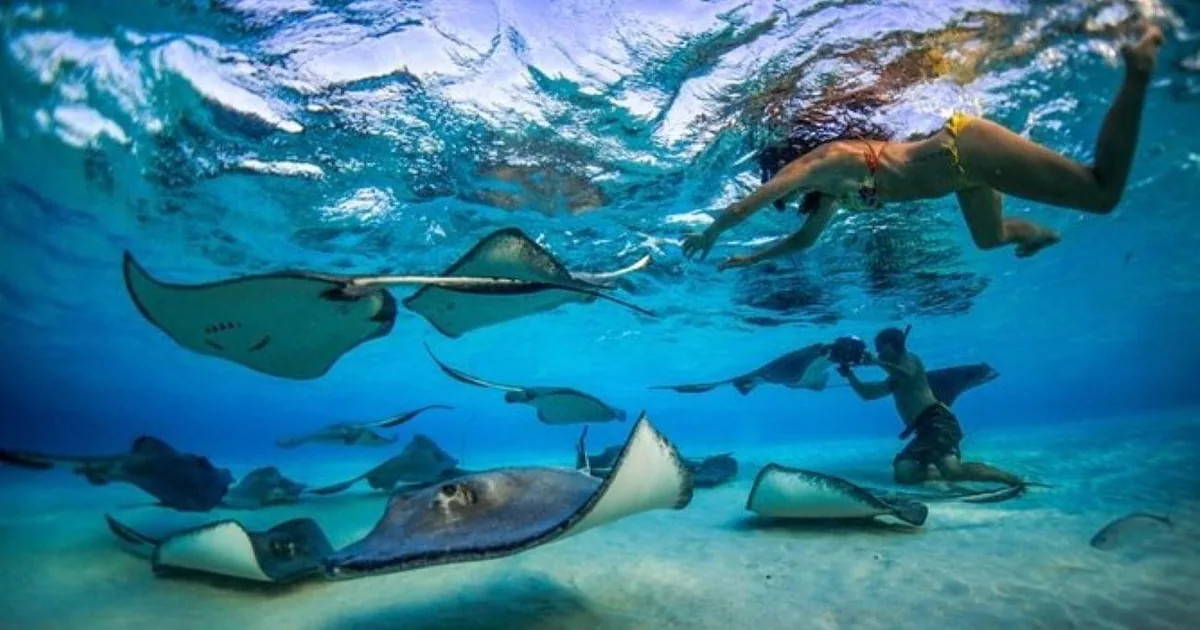 Smaller shared boat
Grand Cayman: Stingray City and Cayman Reefs Snorkeling Tour
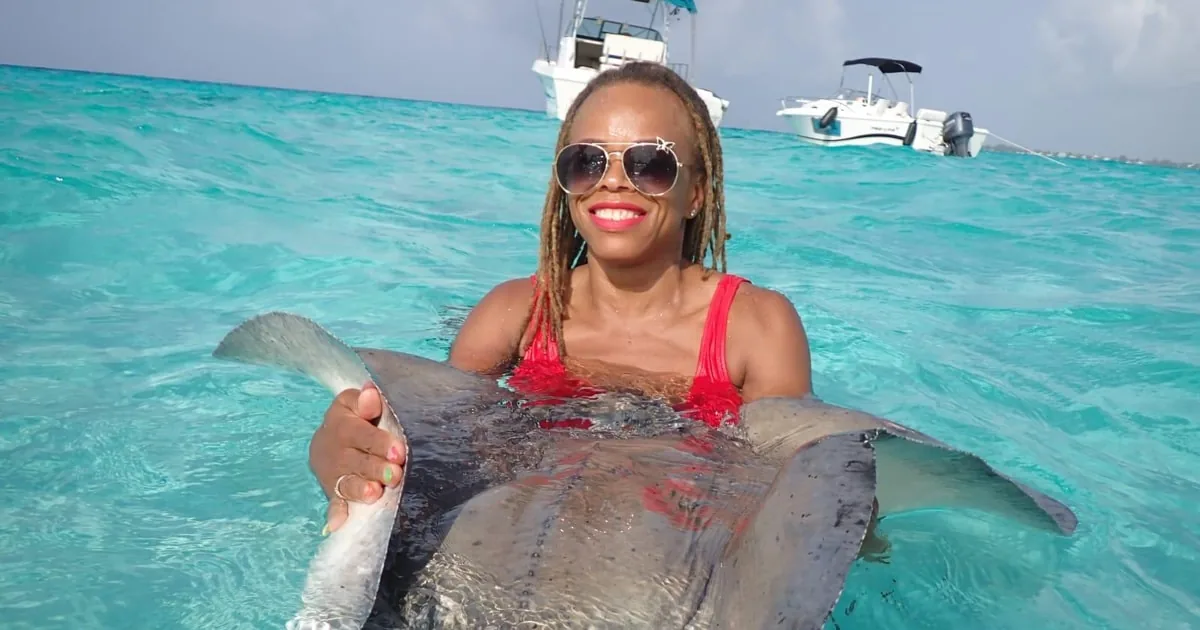 Private — per boat, up to 10Whole boat, up to 10
Private: Stingray City & Snorkeling Charter (Most Popular)
Verbatim reviews, with the sample sizes stated, are on the reviews hub — including the smaller shared boat and the private charter.
Frequently asked questions
What is Stingray City in Grand Cayman?
Two places with one name, in the North Sound at about 19.3757 N, 81.3048 W. One is a sandbar where visitors stand in roughly three feet of water; the other is a deeper site used for scuba diving. Southern stingrays gather at both, and crew hand out chunked squid for visitors to feed them by hand.
How deep is the water at Stingray City?
About three feet at the sandbar, which is why it is sold as a stand-up experience — most adults are in to roughly chest height once they are off the boat. The dive site that shares the name is deeper. Check which one a listing means before you book.
Are there concerns about feeding the stingrays?
Yes, and they are published. Wikipedia’s article on Stingray City records growing concerns about alterations in behaviour, feeding patterns and general ecology of these rays compared with rays not receiving supplemental nutrition. That source does not rule the feeding harmful or harmless, and it publishes no population figure, so this site prints neither.